Key Takeaways
- Best seasons to visit: October to March offers the best combination of comfortable weather, wildlife viewing and safari conditions.
- Best for wildlife: December to February is ideal for cooler, drier conditions and generally better visibility.
- Less people: March-April or September may be less crowded but still have good wildlife opportunities.
- Avoid safari: June to September is the monsoon season, when heavy rain can restrict access and safari activities.
- Early morning is one of the best times for wildlife viewing since it is cooler and the animals are more active.
- Plan for weather: Winter mornings can be cold, while April–May can become extremely hot, so pack according to the season.
There is the kind of morning that is just uniquely Chitwan: the morning that the jungle wakes before breakfast, and a one-horned rhino is silently walking through the grass. Here it differs from crisp winter mornings to lush calm after monsoons, depending on the time of visit.
The Chitwan National Park, first set up in 1973 as the nation's first national park, and recognized as a UNESCO World Heritage Site in 1984, covers a diverse range of forests, grasslands and wetlands in the southern Terai. Today, it remains one of Nepal’s premier wildlife destinations and an important, protected area. Like any wild landscape, however, knowing the best time to visit Chitwan can make your experience even more rewarding.
We at Soaltee Westend Resort Chitwan have prepared this itinerary to help you make your trip a clear one and not a guess.
Chitwan National Park Climate
Season
Months
Typical Conditions
Safari Conditions
Autumn
Oct–Nov
Clearer, cooler, post-monsoon
Excellent
Winter
Dec–Feb
Cool, dry and generally clear
Excellent
Spring
Mar–May
Hotter, increasingly dry
Good, especially mornings
Monsoon
Jun–Sep
Hot, humid and rainy
Main-park access restricted
Best Time to Visit Chitwan
The best time to visit Chitwan National Park is generally October to March, when the weather is more comfortable and safari conditions are favorable. December to February is particularly good for wildlife viewing, while March and April can suit birdwatchers and photographers.
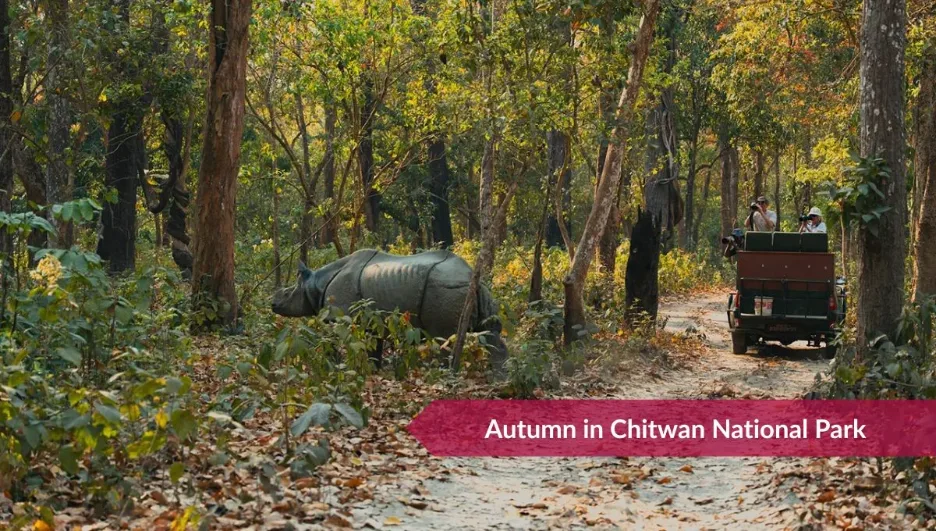
Autumn (October – November): Best for First-Time Visitors
The monsoon exits and Chitwan exhales. The sal forests are just green, rivers are full, and the sky is as clear as the autumn colors of the Terai. The daytime temperatures range from 20°C to 28°C, ideal for open jeep safaris and early river morning trips.
The park is open to wildlife, and full access is resumed after monsoon closures. October is also the time of Dashain and Tihar, the two biggest festivals in Nepal, and that's in addition to the cultural impetus that the trip gives in Sauraha and the Tharu villages.
For those who seek a balance of weather, wildlife activity, and vibrancy beyond the jungle, this is the best time to visit Chitwan National Park.
Packing Tips for Autumn: Pack light layers for mornings and evenings, comfortable walking shoes, insect repellent, sunscreen, binoculars, and a reusable water bottle. The days are warm, but the riverside evenings cool quickly.
Safari Tip: Early morning jeep safaris offer the best light for photography and the most wildlife activity. Make sure to make reservations for safaris, as they are quite crowded during this time of year.
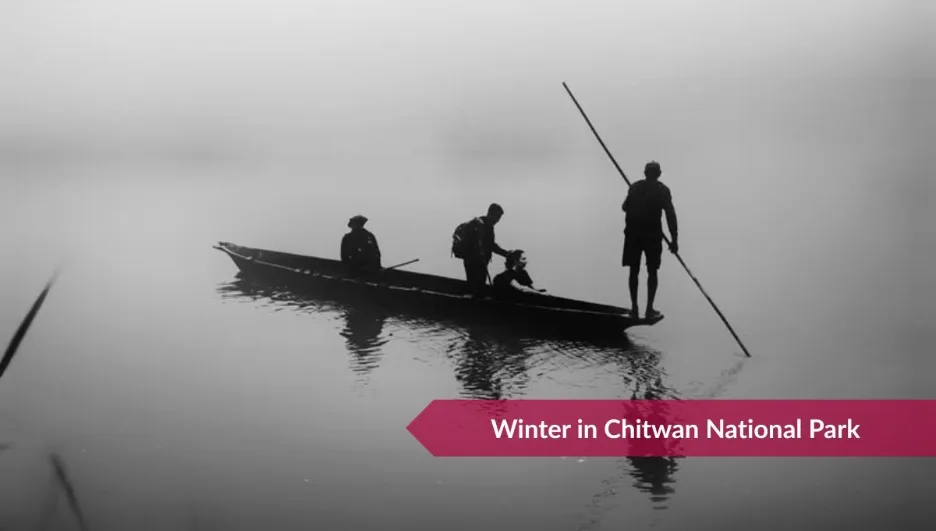
Winter (December – February): Peak Season for Wildlife and Safaris
Ask any naturalist when they would choose to be in Chitwan, and most will say winter. That is the time when the tall elephant grass is mowed down, the field becomes very open, and the animals approach the rivers and waterholes.
Climate: Daytime temperatures range from 15°C to 25°C (59°F to 77°F). Nights are cold with 7°C to 10°C (45°F to 50°F); morning mist will clear slowly as the sun rises. The air is dry and the weather is always sunny; perfect for spending long periods outside.
The best time to spot the Royal Bengal tigers is from November to February when there is less vegetation to conceal themselves. The greater one-horned rhino comes out in good numbers along the banks of river Rapti and Narayani. Exposed sandbars are used for basking with gharial crocodiles. More than 500 species of birds are found here, both resident and migratory, and this is by far the best time for bird watching in Chitwan.
This is the best season for safaris in Chitwan and the peak season for most wildlife travelers.
Packing Tips for Winter: Layer up — mornings on open jeeps can be genuinely cold. Take a windproof jacket, thermal base layers for early starts, comfortable walking boots, a decent camera, and binoculars. People don't realize how much difference warm socks can make.
Safari Tip: Make sure to book in advance. This is the peak demand window of the year and in particular December, January and Tihar/Dashain shoulder (November) are the most in-demand periods. Soaltee members of our Heritage Club have priority booking access and exclusive rates on all our Soaltee properties in Nepal, especially when Chitwan is in peak season.
The best time to see wildlife is in the early morning. The first hour after dawn is when most large animals are moving. The late afternoon around 4-6 PM is also a good time. The best time to visit the resort is at midday.
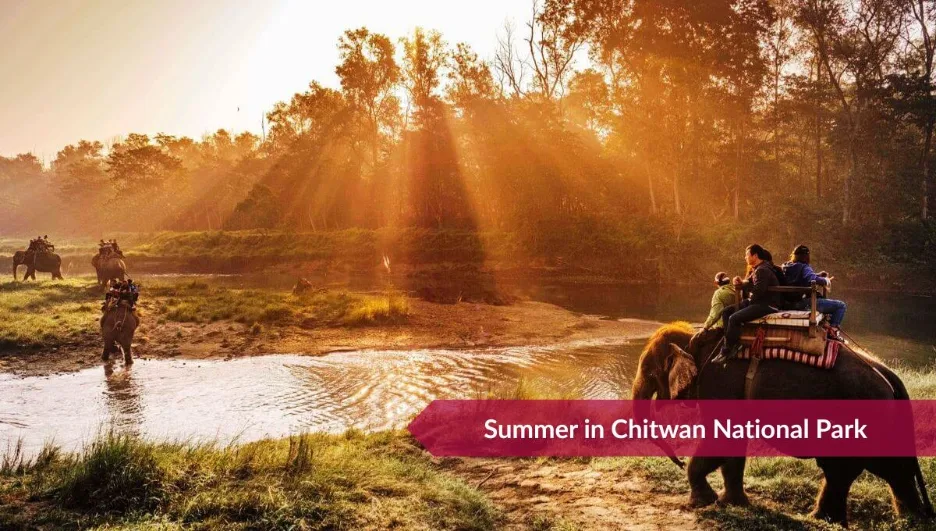
Spring (March – May): Wildlife Photography and Birdwatching
Spring is a season of extremes in Chitwan. Until March and April the park remains dry with water being clustered and larger animals such as tigers focusing on watering points. In fact, this is a great window for wildlife photography because when it gets even hotter, the animals get more predictable!
In May, temperatures are regularly in the 38°C to 42°C range during the morning and late afternoon. Avoid going outdoors during the day
What spring brings comfort; it brings back birdlife. Migratory birds start to migrate north, and resident birds enter breeding season, colourful, vocal, and very visible. If you are a serious bird watcher, then the months of March and April are indeed wonderful months to visit Chitwan.
In addition, spring is often a more comfortable time to travel, with more room available and more favorable rates compared to the peak of the winter season (December–February).
Packing Tips for Spring: Light, breathable clothing is essential. A wide-brimmed hat, sun cream, insect repellent, and sunscreen is essential. Always take a reusable water bottle and drink regularly; the heat can trick you into the shade.
Safari Tip: Time for your activities around the temperature. The earlier you get on your jeep, the better your wildlife window will be, and the more comfortable you'll be. Come back to the resort by 11 AM. Return to activity at 4 PM.
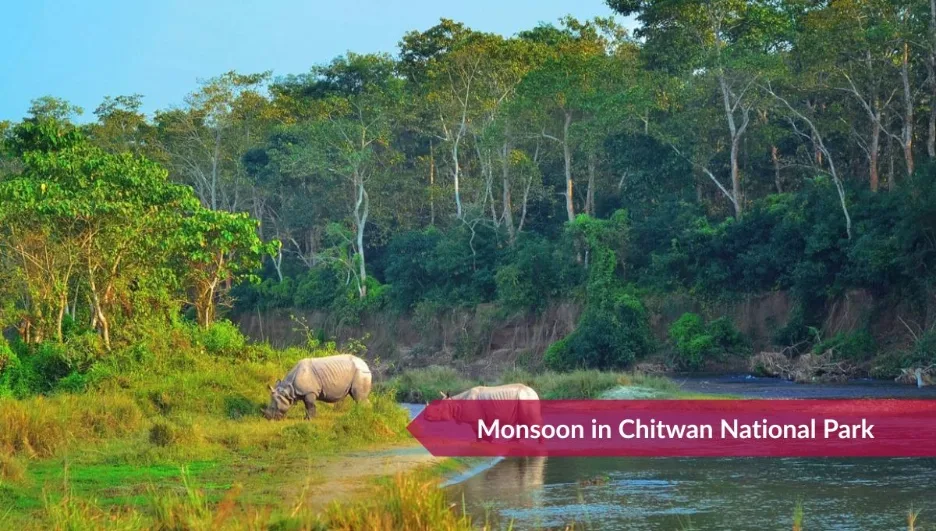
Monsoon (June – September): Solitude and Lush Landscape
During the monsoon, Chitwan becomes lush and green. Daytime temperatures range from 25°C to 30°C (77°F to 86°F), with cooler nights. The forest thickens, the rivers rise, grasslands grow tall, and some parts of the park may be closed off due to floods. Road travel from Kathmandu can also be affected by landslides.
With fewer tourists, the season offers quieter surroundings, intimate Tharu cultural experiences and good resident birdwatching. Monsoons may appeal to those who want to travel alone and in the wild rather than on a set schedule and routine.
For most travelers, however, October to March remains the best time to visit Chitwan National Park.
Packing Tips for Monsoon: Waterproof everything. Quick-dry clothes, a good raincoat, waterproof shoes, and leech socks when walking. It is necessary to have insect repellent. Check road and weather conditions before traveling.
Safari Tip: Avoid deep jungle safaris and instead concentrate on activities around the river and cultural experiences. Canoe rides on the Rapti River are still available and are the best places to see birds along the riverbanks.
Chitwan Month-by-Month: When Should You Visit Chitwan National Park?
- January–February: Cool, clear and excellent for wildlife viewing and birdwatching.
- March–April: Warmer, but still good for wildlife and photography, especially in the mornings.
- May: Hot and quieter, with early-morning safaris recommended.
- June–August: Monsoon season brings lush greenery, fewer visitors and possible access restrictions.
- September: Rain starts to move away, and the landscapes turn greener; access slowly improves.
- October–November: Comfortable weather and excellent conditions for safaris and outdoor activities.
- December: Cool, dry and favorable for wildlife viewing.
Choose your Chitwan trip according to the experience you prefer. October through March is the best time for comfortable weather and wildlife activities. For those who want to see less crowds, more greenery and a quieter time in Chitwan, the monsoon season provides a different experience.
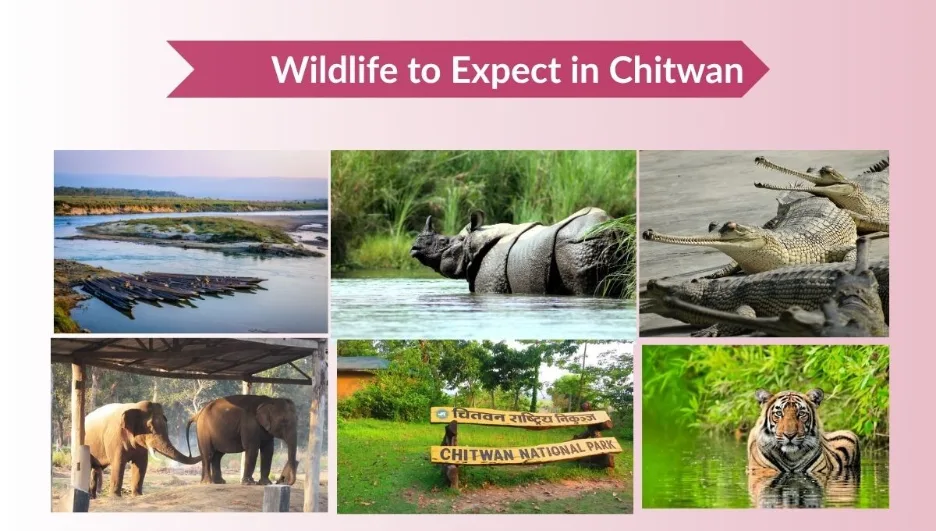
Wildlife to Expect in Chitwan
Chitwan is one of the most densely populated areas in Asia for the greater one horned rhino, a conservation success story. Royal Bengal tigers are seen regularly and in significant numbers during the dry season. A wildlife list of wild Asian elephants, sloth bears, leopards, spotted deer and gharial crocodiles makes the Chitwan jungle safari one of the most diverse in the subcontinent.
More than 540 species of birds have been identified in the park, including the Bengal florican, an endangered species, and the great hornbill.
How Many Days Should You Spend in Chitwan?
Three nights and four days is enough to get the basics covered: a full-day jeep trip, canoe ride on the Rapti River, a jungle walk and a Tharu cultural evening. Two nights is fine but will feel quick. This is ideal for anyone who's serious about wildlife photography or prolonged birdwatching.
You can also check out: Top Places to Visit in Chitwan, Nepal
Essential Travel Tips for Chitwan National Park
Chitwan is not a theme park, but a living place. This has an impact on how you visit.
Pack right - binoculars, insect repellent, hat, sunglasses, comfortable walking shoes, reusable water bottle, sunscreen and windproof jacket for safari vehicles.
Follow Park rules: Always stay with your guide. Avoid straying from trails. Your guide is not there for your convenience, but also for your safety.
Respect wildlife distances: Observe animals from a safe distance. No sudden movements, no raised voices. Those animals in the wild are unpredictable, and the dignified way of interacting with them is the safest.
Leave no trace: Carry out everything you bring in. NEVER dump garbage in or near the park. This should be done by all visitors to Chitwan.
Getting to Chitwan and Staying at Soaltee Westend Resort Chitwan
Chitwan is easily accessible by road from Kathmandu, taking about 5-6 hours, or by domestic flight to Bharatpur airport in about 25 minutes. If you're looking to travel across multiple cities in Nepal, flying may be more convenient.
The Soaltee Heritage Club app allows members to search and book domestic Buddha Air flights, hotel accommodation and loyalty benefits to plan trips between Kathmandu, Pokhara, Chitwan and Nagarkot.
For accommodation, Soaltee Westend Resort Chitwan combines access to Chitwan's wildlife and cultural experiences with the comfort of a 5-star resort. Visitors can book guided jeep safaris, boat rides on the Rapti River, and Tharu cultural tours, and they can enjoy good food, relaxation and hospitality.
Soaltee Heritage Hour, our signature Hi-Tea ritual for Soaltee Heritage Club members. Daily, 5:30–6:30 PM: light snacks and pastries, plus select house beverages for Gold, Platinum, and Signature members. Meanwhile, Soaltee Heritage Club members can enjoy benefits such as dining privileges, room upgrades and exclusive rates across participating Soaltee properties in Nepal.

When to Go: Our Final Word
For most travelers, October to March offers the best overall combination of comfortable weather, wildlife viewing and safari conditions. December to February is particularly strong for dry-season wildlife viewing, while March and April can be attractive for birdwatching and photography.
Each season comes with its own set of offerings, but it's the one that fits your priorities that makes the difference between a good trip and one that you're still talking about years later.
Once you are ready to plan, contact our team and we will make sure you get all the details correctly.
FAQs
What is the best time to visit Chitwan National Park?
October to March is the best time to visit Chitwan National Park, with cooler, drier weather and better overall safari conditions.
Is morning a good time for a jungle safari in Chitwan?
Yes. One of the best times for a Chitwan jungle safari is the morning as it is during this period wildlife are mostly active and cooler.
Can I see the Bengal Tigers in Chitwan?
Yes, Chitwan National Park is home to Bengal tigers, but sightings are never guaranteed. Dry season conditions may result in better visibility.
What is the coldest month in Chitwan?
January is generally the coldest month in Chitwan, with cool mornings and nights and mild daytime temperatures.
When should I avoid visiting Chitwan National Park?
June to September is generally the least convenient time for a safari because of the monsoon, heavy rain and possible restrictions on park activities.
What is the entry fee for Chitwan National Park?
The entry fee is NPR 150 for Nepali citizens, NPR 1,000 for SAARC nationals and NPR 2,000 for other foreign visitors per entry.
How much does a full-day jungle safari cost in Chitwan?
The price of a private full day jeep safari is typically NPR 10,000 - 15,000 per jeep, depending on the operator and services included. Entry to the Park is an added charge.