Key Takeaways
- Wear lightweight, breathable clothes in neutral colors for most Chitwan activities.
- Choose long trousers and comfortable closed-toe shoes for jungle walks and safaris.
- Pack sunscreen, sunglasses, a hat, and insect repellent for sun and insect protection.
- For cool early mornings, bring a light jacket or fleece with you from November to February.
- From June to September, pack a lightweight rain jacket, quick-drying clothes and waterproof protection for your electronics.
- For a Chitwan safari, carry water, a small daypack, phone/camera, and any essential medication.
- Binoculars are useful for bird and wildlife watching, but they are optional.
- Avoid bright colors, strong fragrances, open-toe footwear, and uncomfortable shoes during jungle activities.
- Pack light for a 2-night visit to Chitwan, and not a big suitcase.
If you are planning a tour of Chitwan, you must have some questions about what to wear and what to pack.
For most activities in Chitwan, carry lightweight, breathable clothing, long trousers, comfortable closed toe shoes, sunscreen, sunglasses, hat and insect repellent. A light jacket for cool winter mornings and a light rain jacket or waterproof jacket for the monsoons.
Your packing can also vary depending on what you plan to do.
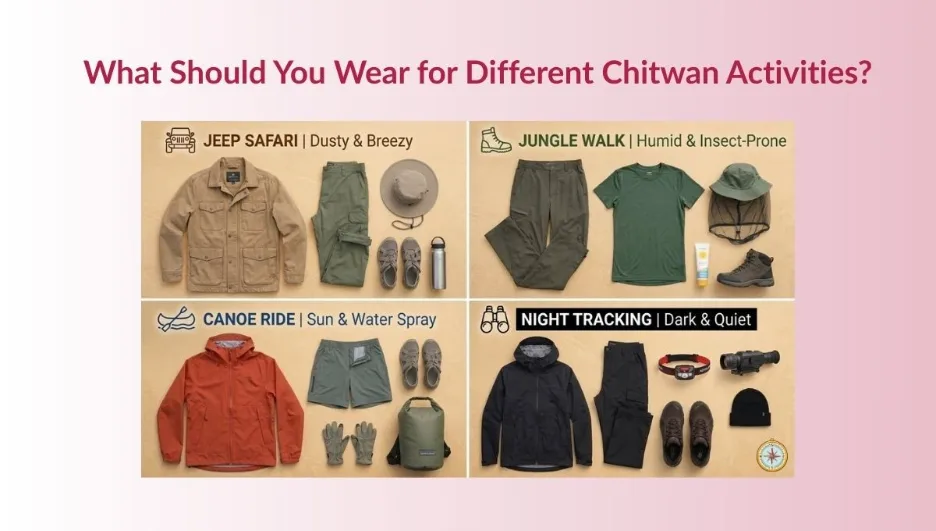
Comfortable layering for a jeep safari, long sleeves and sturdy footwear for a jungle walk, and waterproofs for your phone and camera for a canoe ride on the Rapti River. For village visits, select comfortable and respectful clothes for the Tharu community
We at Soaltee Westend Resort Chitwan feel it is better to be prepared, so we took the liberty to come up with our own Chitwan tour packing list. Here is what to wear and bring for a comfortable trip, whether you are planning a Chitwan safari, jungle walk, canoe ride, bird-watching experience or cultural visit.
What Should You Wear in Chitwan?
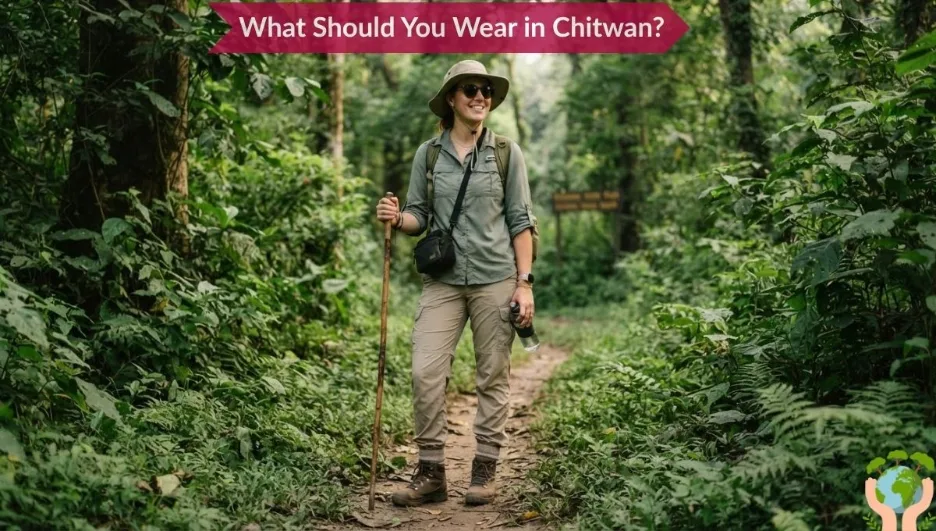
For most Chitwan activities, wear lightweight, breathable clothing in neutral or muted colors, long trousers and comfortable closed-toe shoes. Bring a hat, sunglasses, sunscreen, and insect repellent. Your clothing choices can also vary considerably depending on when you visit, so check out our guide to the best time to visit Chitwan National Park before planning your trip.
The muted colors (khaki, olive, beige, brown, and grey) are suitable for wildlife activities as they are less conspicuous in the natural environment. There's certainly no need to dress up as a "real" safari guide, but comfortable and subdued clothing will work better than flashy and impractical attire.
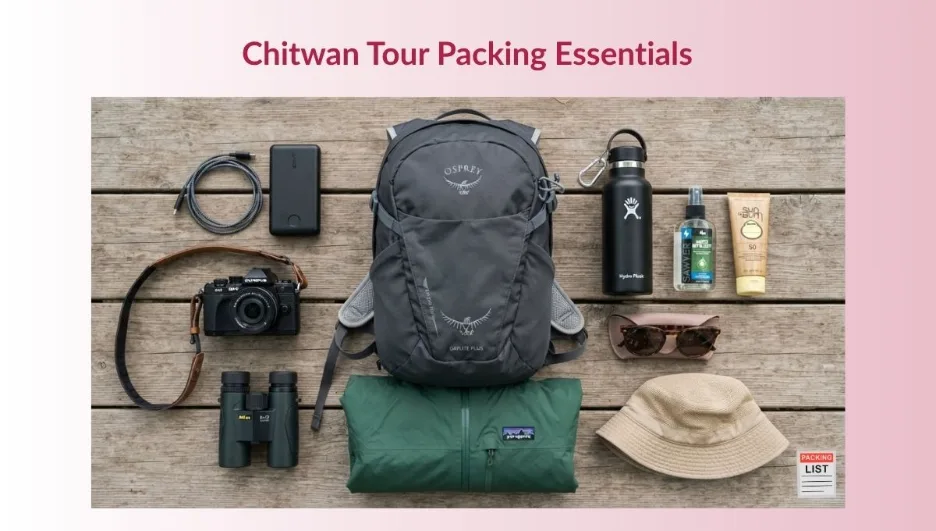
Chitwan Tour Packing List
What to bring
Why it matters
Breathable shirts
Keeps you comfortable in warm, humid weather
Long trousers
Can be used for jungle walking and insect protection.
Light jacket or fleece
Great for cold winter days
Lightweight rain jacket
Essential during rainy periods
Comfortable walking shoes
Smoother on rough roads and outdoors.
Sandals
Useful around the resort
Hat or cap
Protects against the sun
Sunglasses
Reduces glare during outdoor activities
Sunscreen
Important in the strong Terai sun
Insect repellent
Useful during jungle activities and evenings
Reusable water bottle
Helps you stay hydrated
Small daypack
Keeps daily essentials together
Binoculars
Makes distant wildlife and bird sightings easier to enjoy
Camera/phone
For memories and photos.
Power bank
Great for long outdoor days!
Waterproof cell phone or bag cover.
Helpful during rain and canoe rides
Personal medication
For your individual needs
Hand sanitiser and tissues
Useful while travelling
ID and travel documents
Be sure to store critical documents safely.
Some Nepalese cash
Great for smaller items!
What Should You Wear for a Chitwan Jungle Safari?
Jeep Safari
For a jeep safari, dress in layers that you can remove as the day warms up. Long trousers with a breathable shirt, closed toe shoes, a hat, and sunglasses are practical outfits.
Leaving early can be relatively cooler in the winter, especially in an open vehicle, so have a fleece or light jacket with you November through February.
Keep accessories to a minimum and avoid anything that is uncomfortable to manage while getting in and out of the vehicle.
Jungle Walk
For jungle walking, there is a bit more attention to clothing.
Wear long trousers, long sleeves, and sturdy closed-toe shoes with a good grip. The forest floor can be uneven, and long clothing provides useful protection from insects, vegetation, and the sun.
Your daypack should be compact and light. Bring water, sunscreen, insect repellent, a mobile phone or camera, and any personal medication that is required.
Canoe Ride
A canoe ride on the Rapti River calls for light, comfortable clothing and sun protection. A hat, sunglasses, a waterproof pouch or dry bag, and sunscreen are especially helpful, and a waterproof pouch or dry bag will keep your phone and camera dry from splashes.
Wear shoes that are easy to operate around the boat; don't carry unnecessary valuables.
Bird Watching
If birdlife is a priority, binoculars are particularly useful in Chitwan. For more planning advice, see our guide to bird Watch in Chitwan National Park.
Wear comfortable clothing in muted shades, bring sun protection, and choose shoes suitable for walking. A light backpack is best as a large bag will become a burden during extended observation periods.
Tharu Village Visits
Comfortable and respectful clothing is best for visiting local communities. Don't dress in a formal manner, but don't wear clothes that reveal too much; wear practical clothing appropriate for a culture.
What Should You Wear in Chitwan in Each Season?
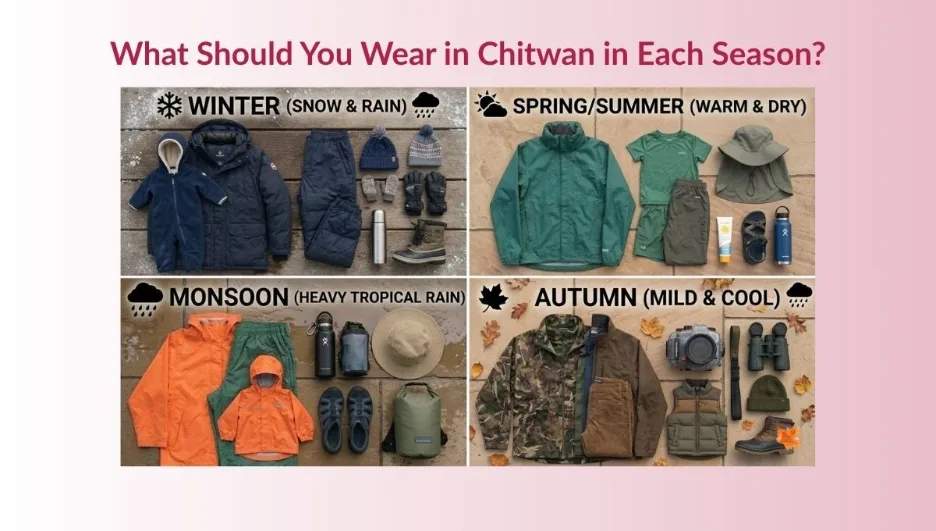
Winter: November to February
Winter mornings tend to be cold and foggy, but afternoons are usually quite pleasant. Layering is the most useful strategy in this case.
Pack:
- Long trousers
- Long-sleeve shirts
- Fleece or light jacket
- Comfortable walking shoes
- Hat and sunglasses
- Sunscreen
- Insect repellent
A warm layer is particularly helpful on early morning jeep safaris when the breeze makes it seem cooler.
Spring and Early Summer: March to May
In hot weather, prioritize keeping cool while ensuring protection.
Pack lightweight, breathable fabrics, comfortable trousers, a hat, sunglasses, sunscreen, and plenty of drinking water. On hotter days, moisture wicking or quick drying clothes can be much more comfortable.
Monsoon: June to September
Monsoon packing should be based on staying dry, as the weather in an outdoor area can change rapidly when it's raining.
Bring:
- Lightweight rain jacket or poncho
- Quick-drying clothes
- Shoes with good grip
- Waterproof protection for phones and cameras
- Insect repellent
- Extra light clothing
It's good to have a small waterproof bag or rain cover for your daypack.
Autumn and Post-Monsoon: October
October typically means clearer and more comfortable weather. Light layers are good because mornings and evenings may be cool, but afternoons are warm.
If you enjoy watching wildlife or photography of birds, this is also a good time to pack binoculars or cameras.
What Not to Wear on a Chitwan Safari?
As much as knowing what to pack, it's important to know what to leave behind.
Avoid:
- Bright or fluorescent colors during wildlife activities
- Footwear with open toes for jungle walking
- High heels or uncomfortable shoes
- The use of heavy fabrics in warm temperatures and climates
- Excessive jewelry
- Strong fragrances
- Brand-new shoes that have not been broken in
- Clothing that is difficult to layer
After the resort, comfort and functionality take priority over fashion.
What to Pack for a 2-Night Chitwan Trip?
For a short stay in Chitwan, you don't need to have a large suitcase.
A 2-night packing system might consist of:
- Clothing: 2–3 breathable shirts, 2 pairs of long trousers, underwear, sleepwear and a light jacket in winter.
- Footwear: a pair of comfortable walking shoes and 1 pair of sandals.
- Outdoor essentials: Hat, sunglasses, sunscreen, insect repellent, reusable water bottle and a small daypack.
- Technology: Phone, charger, power bank, camera, and spare batteries if required.
- Personal items: Toiletries, medication, tissues, sanitizer and any personal essentials.
- Rain protection: Lightweight rain jacket or poncho during the wet season.
Extra Tips for Families
When traveling with kids, it's time for a little more careful packing. Carry an extra change of clothes, comfortable footwear, water, sun protection, insect repellent and any medication the child needs.
Pack light for the day and carry only the items you are likely to need for each activity. An extra shirt can come in handy for longer outdoor trips.
What Do Travelers Often Forget to Pack for Chitwan?
Some small things come in handy once you're in Chitwan.
Swimwear: If your hotel or resort has a swimming pool, you may appreciate having it after a warm day outdoors.
Torch or headlamp: Useful if you return to your accommodation after dark.
Zip-lock or waterproof bags: Handy for phones, documents and other small electronics.
Lip balm and moisturizer: Particularly useful during dry winter days.
Earplugs: The jungle can be wonderfully alive at night, with frogs, insects, and other natural sounds.
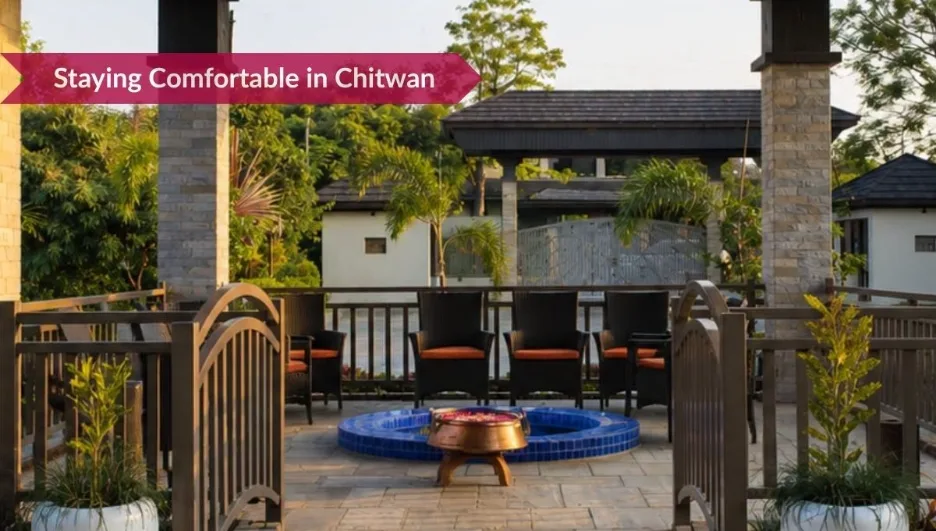
Staying Comfortable in Chitwan
Good packing should support the experience, not become part of it. Carry only what you need during each activity, stay hydrated, protect yourself from the sun and insects, and dress according to the day's weather.
At Soaltee Westend Resort Chitwan, the resort staff can also arrange outdoor activities based on the weather forecast for the duration of your stay. For more hands-on planning tips, check out our guides to the the best things to do in Chitwan.
To really connect with the area, you can set aside some time for a Tharu cultural experience along with your wildlife activities. It brings a human and cultural element to a Chitwan trip not offered by a safari.
To Conclude
The most important thing for a Chitwan tour packing list is that it should not be too long. It's the one that gets ready for the weather, the outdoor fun and spending hours in nature without any burden on you.
Pack light, comfortable clothing, shoes, sun and insect protection, a light daypack and a few necessary items for the activity. Add layers in winter and rain protection during the monsoon, and you will be ready for the jeep safari, jungle walk, canoe ride and cultural experiences that make Chitwan special.
Pack light. Dress comfortably. Leave room for the experience.
Soaltee Westend Resort Chitwan offers a comfortable base for exploring the Chitwan region, combining resort amenities with access to wildlife, nature and cultural experiences.
Frequently Asked Questions
What should I wear in Chitwan National Park?
Wear lightweight long trousers, a breathable shirt, comfortable closed-toe shoes, a hat, and sunglasses. Add a light jacket for winter mornings and rain protection during the monsoon.
What should I wear for a Chitwan safari?
During the Chitwan safari, wear long pants, a shirt that is breathable, comfortable shoes, a hat, sunglasses, and sunscreen. If it is cold, and a morning drive, a light jacket is a good idea.
Can I wear shorts in Chitwan?
Yes, shorts can be comfortable around your resort, particularly in hot weather. However, in general, long trousers are more functional for jungle walks and outdoor activities, as they provide more coverage.
What shoes should I wear in Chitwan?
The best shoes to wear are closed-toe shoes that have been comfortable for walking for a long time and have a good grip. Waterproof shoes may be helpful during the rainy season.
What should I pack for Chitwan in winter?
Pack layers, including long trousers and a light jacket, along with comfortable shoes, sun protection and insect repellent.
What should I pack for Chitwan during monsoon?
Bring quick-drying clothes, a lightweight rain jacket or poncho, footwear with good grip, insect repellent and waterproof protection for your phone, camera and other electronics.
Do I need insect repellent in Chitwan?
A Chitwan packing list should also include insect repellent, which is helpful when doing jungle activities and staying out in the evenings.
Do I need binoculars for a Chitwan safari?
Binoculars aren't necessary, but they can enhance the experience of wildlife and bird watching, allowing you to observe animals and birds from a distance.
What should I carry during a Chitwan safari?
Carry water, sunscreen, insect repellent, sunglasses, a hat, your phone or camera, a power bank and any personal medication you need. Keep the bag light.
How should I dress for a Tharu village visit?
Wear comfortable clothes that are appropriate for a local community setting and are modest. Casual dress is acceptable, as long as it is practical and respectful.