A morning in Kathmandu can start in a centuries-old market, where you might find sacks of spices, and end up in a historic courtyard where a specially prepared Newari dish awaits your taste buds. Between them they can have local tea, a plate of momo, or a local thakali meal.
This makes Nepal culinary travel very rewarding. There are no common traditions about food in Nepal. It offers a diverse range of cuisines, influenced by regions and communities, including Indian and Tibetan dishes, as well as unique Newari and Thakali cuisine.
Kathmandu brings many of these experiences together, from traditional eateries and local markets to contemporary restaurants and five-star dining.
The best food journey is not just a list of things to try; it's a journey that is truly memorable. It is all about knowing what to eat, where to eat it, when to eat it, and how to eat it with respect.
At a Glance
Best Starting point: Asan Market, Kathmandu
Best for Newari cuisine: Patan and the Kathmandu Valley
Regional cuisine to try in Kathmandu: Thakali
Seasonal foods to look for: Yomari and kwati
Dining essential: Dining traditional, using right hand and knowing about jutho
Best choice: Discovery of local food and plenty of time for the city.
Key Takeaways
Nepal's food culture changes across regions, communities and traditions.
Kathmandu provides an exceptionally wide selection of both Nepali and international restaurants and eateries within short distances.
Asan is a worthwhile experience of local produce and market activities.
Two unique tastes of Nepali cuisine are found in Newari and Thakali cuisines.
Festival foods can help enhance the experience of a culinary adventure.
Knowing basic food safety and dining etiquette can make eating in a new place easier and more comfortable.
Why Nepal is a special culinary destination?
Nepal's geography and cultural diversity are reflected in its food.
Food habits differ across the mountains, hills, and plains, while communities have developed their own dishes, ingredients, and traditions. In Nepal Tourism Board (NTB) recognizes Newari and Thakali food as unique regional cuisine.
This is a more interesting travel option than just finding one and only one “authentic” Nepali meal. A meal can tell a story about a region, a community and a festival tradition – sometimes all three.
Kathmandu is especially valuable because the Valley hosts a variety of culinary traditions along with international dining options.
Which Nepali Foods Should You Try?
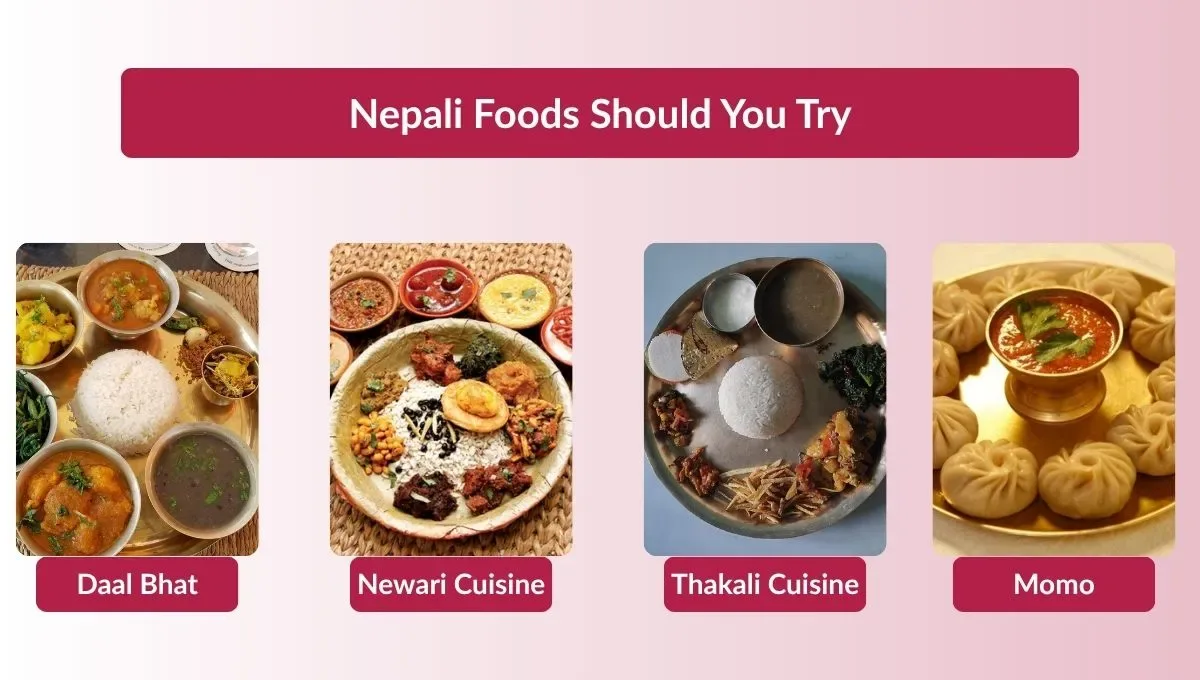
From everyday staples to distinctive regional traditions, these foods offer a strong introduction to Nepal's diverse culinary heritage.
Dal Bhat, Tarkari and Achar
One of the staples of Nepali everyday meals is dal bhat, a combination of rice or lentils, tarkari and sometimes achar. Nepal Tourism Board talks about dal, bhat and tarkari as the daily meal in Nepal, but has also said that the food habits differ according to the regions.
Pay attention to the accompaniments. Foods such as vegetables, greens, pickles and seasoning can vary greatly from kitchen to kitchen and make a simple meal taste completely different across the board.
Newari Cuisine
The cuisine of Newari is at the heart of the food culture of Kathmandu Valley. These dishes are part of a much wider tradition of food involved with festivals and life, like samay baji, choila, bara, chatamari and yomari. This tradition is explored in the depth of heritage cuisine material produced by Nepal Tourism Board.
A meal of Newari cuisine is one of the most rewarding ways to discover the Valley, for those who want to know both its heritage and its cuisine.
Thakali Cuisine
Thakali cuisine originates in the Thak Khola region of Mustang and is now enjoyed throughout Nepal. It has a similar overall structure to rice, lentil, vegetable and pickle dishes served in Nepal, but with a regional flavor.
If you're in Kathmandu, you can experience a mountain-region tradition without having to travel to Mustang by trying out the Thakali cuisine.
Momo
Although closely related to the Himalayas and Tibet, Momo has become well entrenched within the Nepali food culture. Nepal Tourism Board identifies momo as one of Nepal's most popular snacks.
When possible, use steamed or fried versions and remember to watch for achar that was served with them. For first time visitors, momo is a perfect starter, but it's just the beginning of Nepal's culinary journey.
Which local markets to visit in Kathmandu?
The local markets of Kathmandu provide a more intimate look at the Nepali cuisine and its ingredients, as well as the everyday culture and modes of eating in Nepal.
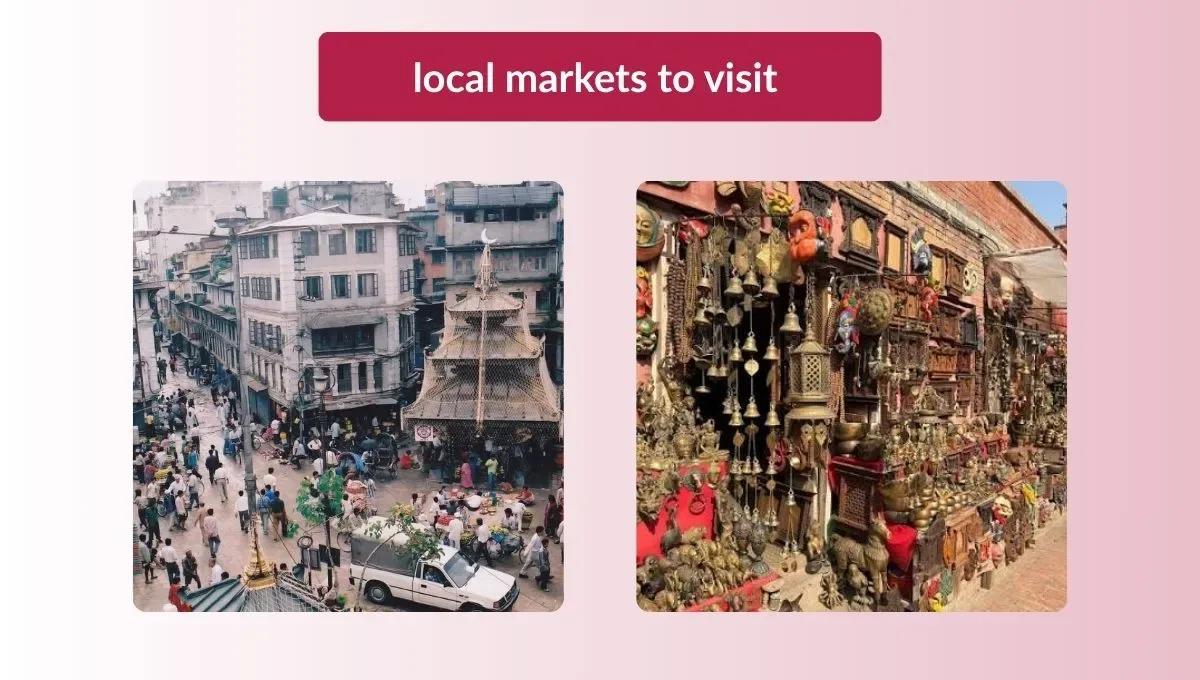
Asan Market
Asan is one of the best places to begin. Nepal Tourism Board describes the historic market square as a major shopping center where six roads radiate outward, and shops sell spices, fresh vegetables, groceries, kitchenware and other everyday goods.
The experience is not simply about shopping. Look at the spices, grains, dried ingredients, seasonal produce and pickles, and notice how the market connects households, shops and local kitchens.
Go with time to observe rather than rush and ask before photographing vendors or people.
Patan and Bhaktapur
Patan offers a particularly strong combination of Newari heritage and food culture. Bhaktapur adds another distinctive culinary experience through Juju Dhau, the thick traditional yoghurt associated with the city.
Together, Kathmandu, Patan and Bhaktapur make it possible to explore several sides of Valley food culture without committing to long-distance travel.
For help choosing a base, explore Where to Stay in Kathmandu.
When Is the Best Time for Nepal Culinary Travel?
There is no single best season for food in Nepal. Instead, festivals and harvest traditions can influence what is available at particular times of year.
Yomari Punhi is one of the most notable food-related festivals in the Kathmandu Valley. Nepal Tourism Board describes yomari as a steamed, fish-shaped dumpling made from new-harvest rice flour and traditionally filled with chaku or khuwa and sesame.
Janai Purnima is associated with kwati, a traditional sprouted-bean soup, while the festival has a particular cultural significance for Newar communities in the Kathmandu Valley.
Festival dates follow the lunar calendar and change each year, so check the specific dates for your trip.
For broader seasonal planning, read Best Time to Visit Kathmandu for a Luxury Experience.
What Dining Etiquette Should Visitors Know in Nepal?
A few simple customs can make traditional meals much more comfortable.
Use the right hand in traditional settings: Nepal Tourism Board notes that the right hand is traditionally used for eating and for giving or receiving items.
Understand jutho: Food or material that has been touched by another person's mouth is traditionally regarded as jutho and is not generally shared outside close relationships.
Respect religious settings: Shoes may need to be removed before entering homes or places of worship. Some Hindu temples restrict entry to non-Hindus, and visitors should ask before taking photographs in sensitive cultural settings.
The aim is not to memorize every custom. Observe, ask politely, and follow the lead of your host.
How Can You Enjoy Local Food Safely?
Trying local food should not require unnecessary risk.
When choosing street food, favour food that is cooked thoroughly and served hot. Be more cautious with raw vegetables, untreated water, and ice when the water source is uncertain. CDC guidance recommends avoiding risky food and water choices while traveling.
This does not mean avoiding local food. It means choosing thoughtfully.
Travelers with allergies or specific dietary requirements should also communicate with them clearly before ordering.
What Should Vegetarian Travelers Know?
Nepal offers plenty of vegetarian choices, particularly through meals based around rice, lentils, vegetables and pickles.
Still, do not assume a dish is vegetarian simply because it contains vegetables. Ask about meat stock, eggs, ghee or other ingredients when they matter to you.
For serious allergies or medically necessary restrictions, speak directly with the restaurant before ordering.
What Are the Best Culinary Experiences in Kathmandu?
A good Kathmandu food experience is not necessarily about visiting the greatest number of restaurants. It is about creating contrasts.
Begin in Asan to see the ingredients and market culture behind local cooking.
Continue to Patan/Kathmandu/ Bhaktapur for heritage and Newari food.
Leave the afternoon lighter, perhaps with tea, yoghurt or a small sweet, and reserve the evening for a slower dining experience.
Kathmandu's dining scene is concentrated around areas including Thamel, Lazimpat, Durbarmarg, Jhamsikhel and Boudha, while restaurants are also spread throughout the wider Valley.
For a broader city itinerary, explore Best Things to Do in Kathmandu.
What Signature Culinary Experiences Should You Look For?
The most memorable food experiences often combine place, people and food rather than simply a famous dish.
A market visit can show you how local ingredients enter everyday kitchens.
A traditional Newari meal can connect food with Valley heritage.
A Thakali dinner can introduce a regional mountain tradition without leaving Kathmandu.
A seasonal festival can reveal dishes that carry cultural meaning beyond the table.
And after a day of exploration, a refined hotel dining experience can offer a different pace — one built around comfort, service and time.
How Does Luxury Fit into Nepal Culinary Travel?
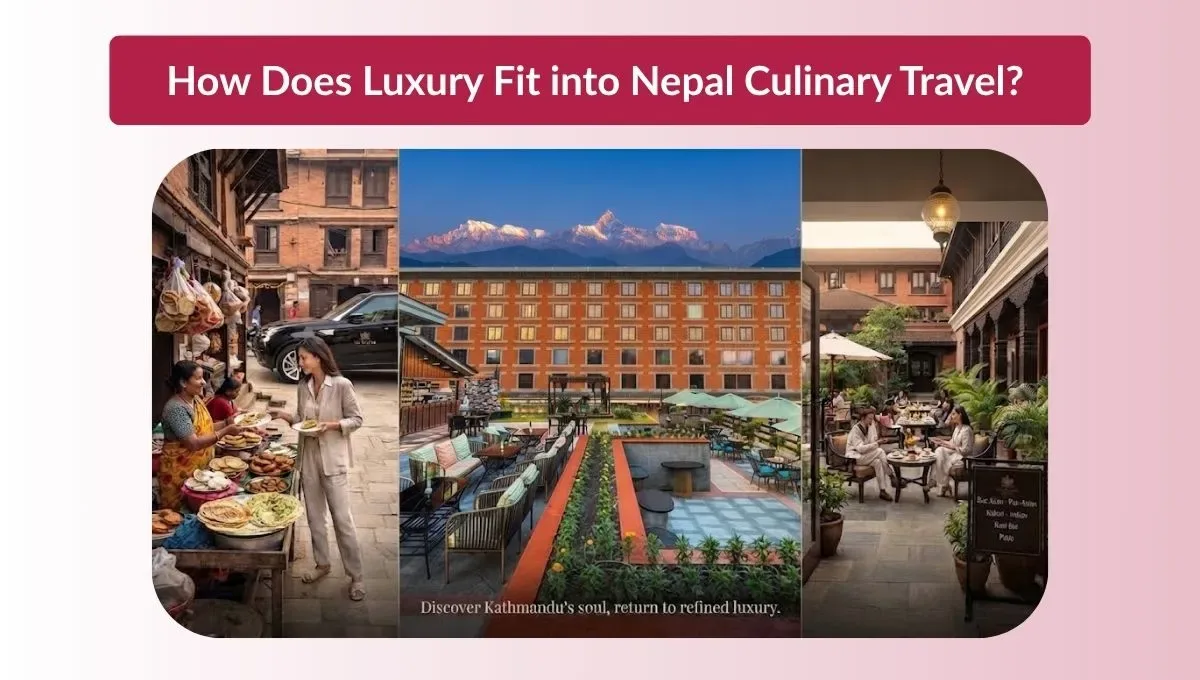
Luxury does not have to mean stepping away from local culture. It can mean having a comfortable base from which to experience it more thoughtfully.
At The Soaltee Kathmandu, our Tahachal property is set across 12 acres of landscaped gardens and offers 285 rooms and suites. It is approximately 9 kilometres from Tribhuvan International Airport and provides five dining destinations within the property.
Our current dining portfolio includes Garden Terrace, Patio, Bao Xuan, Kakori and Rodi Bar, giving guests a range of settings and cuisines during their stay.
That creates a natural balance for culinary travelers: discover Kathmandu's markets and traditional food during the day, then return to a refined setting when the day is done.
For a closer look at dining at the hotel, explore Fine Dining Experience at The Soaltee Kathmandu.
Conclusion: Let Food Become Part of the Journey
The best Nepal culinary travel experiences are not about ticking every famous dish off a list. They are about understanding what is behind the plate.
A morning in Asan can reveal the ingredients that shape everyday cooking. A Newari meal in Patan can connect food with the heritage of the Kathmandu Valley. A Thakali dinner can introduce a mountain-region tradition without leaving the capital. A festival can show why some foods belong to a particular season or celebration.
That is what makes food such a valuable way to travel through Nepal. It gives you another way to understand the country; through its markets, communities, traditions, and hospitality.
And when the day's exploration is over, the experience does not have to end. It can simply change pace.
At The Soaltee Kathmandu, discovering Nepal through food and culture can be paired with the comfort, calm and considered hospitality of a five-star stay.
You Might Also Like
Planning your Kathmandu stay? Where to Stay in Kathmandu : choose a base that balances cultural exploration, dining and convenience.
Want to experience more of the city? Best Things to Do in Kathmandu : combine culinary discoveries with Kathmandu's heritage and cultural landmarks.
Planning around the seasons? Best Time to Visit Kathmandu for a Luxury Experience : consider the weather, timing and the experiences you want from your stay.
Looking for an elevated evening? Fine Dining Experience at The Soaltee Kathmandu : explore the hotel's current dining experience after a day of culinary discovery.
Frequently Asked Questions
What is Nepal culinary travel?
Nepal culinary travel means experiencing the country through its food culture, including traditional dishes, regional cuisines, local markets, seasonal foods and dining customs.
What food is Nepal famous for?
Nepal is particularly known for dal bhat and momo, while Newari and Thakali cuisines provide important regional perspectives on Nepali food.
Where can I experience local food in Kathmandu?
Asan is a strong starting point for exploring local ingredients and market culture, while Patan and Bhaktapur are particularly valuable for Newari food and heritage. Kathmandu also has a broad, fine-dining scene.
What is Newari cuisine?
Newari cuisine is the distinctive food tradition of the Newar community of the Kathmandu Valley. It includes dishes such as samay baji, choila, bara, chatamari and yomari and is closely connected with festivals and community life.
What is Thakali cuisine?
Thakali cuisine originates in the Thak Khola region of Mustang and is a distinct regional expression of Nepal's wider rice, lentil, vegetable and pickle-based food tradition.
Can you eat with your hands in Nepal?
Yes. Eating traditional Nepali meals with the right hand is customary in many settings, while cutlery is widely available in modern restaurants and hotels.
What does jutho mean in Nepal?
Jutho refers to food or material regarded as impure after contact with another person's mouth. The concept is particularly relevant in traditional dining situations.
When is the best time for a food-focused trip to Nepal?
Any season can offer worthwhile culinary experiences, but festivals can provide access to seasonal and ceremonial foods. Check festival dates for your specific year of travel.